When I first started with Kubernetes, times were different. The hosting options at our disposal were pretty basic. We had some hosted VMs in a data center for our e-commerce site and we were mainly on GCP for our data stack: GCP was mainly VMs, App Engine, and BigQuery. When we got access to Kubernetes 0.8 through the managed service (now called GKE), my horizons immediately widened; I really saw the potential and didn't look back.
Since then I've always been on a managed service, even when changing jobs, the priority was on managed. And I was happy about that. Although I always want to know the nitty-gritty details of the underlying technology, I didn't necessarily want to manage it. Knowing the technology will help you make the right decision; the technology is here to serve a specific business need, so managed until now was enough.
But over the last year, something changed. Certainly as a European, you start to realize that you're very dependent on American cloud providers. Something that I never would have imagined would be classified as a risk. This means I need to reevaluate my reliance on managed services. In this respect, I still believe Kubernetes is the right abstraction, but something clicked in my head: Yes, you have a certified Kubernetes platform, but the managed services sometimes blur the boundary between what Kubernetes is and the extra services that are included in the offering.
The mist needs to clear; that's why I want to finally build my own Kubernetes homelab. Not that I believe everyone immediately has to build up their own Kubernetes platform in their basement, but it's to reinforce my own fundamental understanding of what is what. So I placed my order for the first components.
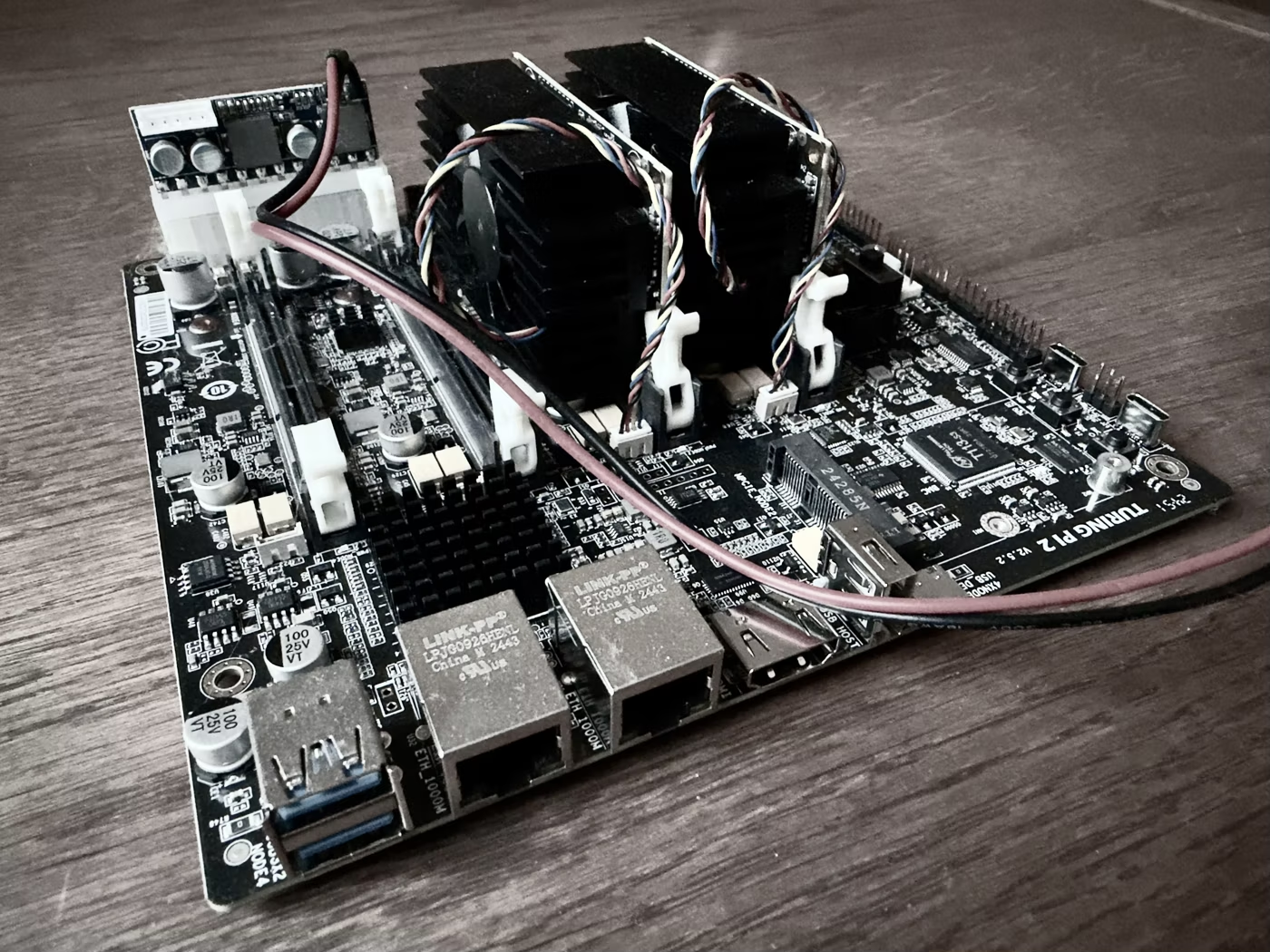
I didn't want it to consume too much energy and I didn't want to virtualize the nodes. I wanted bare metal and enough power; AI on-chip was secondary, but when it works I won't complain. So I landed on the Turing Pi setup. The Turing Pi rig allows you to slot in up to 4 nodes chained together. The modules can be either their own Rockchip-based ARM boards or adapters for the Raspberry Pi Compute Module. I opted for two 32GB Rockchip boards as a start.
Well, they arrived, and I'm pretty excited. Although I will take my time to build it up, I'm not in a rush. When you dig a bit deeper though, you could ask yourself: you're thinking about sovereignty and you are buying Chinese hardware? Well, you have to be pragmatic and realistic. My point for a homelab is having the possibility of an always-on rig that I can use for learning, and for this it's perfect. So, time to do some tinkering.